Rotten Window Repair Company has been repairing and installing various types of American windows for over 10 years. Each of these window types has its own characteristics, advantages, disadvantages, and weaknesses. We decided that it would be appropriate to provide more detailed information about each type of window we work with and, if you are considering installing new windows, to assist you in making your decision.
We repair, replace, and install aluminum, wood, and vinyl windows:
- Casement windows
- Double-hung windows
- Single-hung windows
- Garden windows
- Picture windows
- Awning windows
- Bay windows
- Bow windows
- Sliding windows
- Patio doors
You can be sure: no matter what type of window you have or how complex the damage is, Rotten Window Repair Company will find a solution 100% of the time! We have many years of experience and a solid portfolio of completed projects (you can see our work in the gallery on our website or on our social media accounts on Instagram, X, Facebook, and Threads).
So, let’s talk in more detail about each type of window we work with.
Casement windows
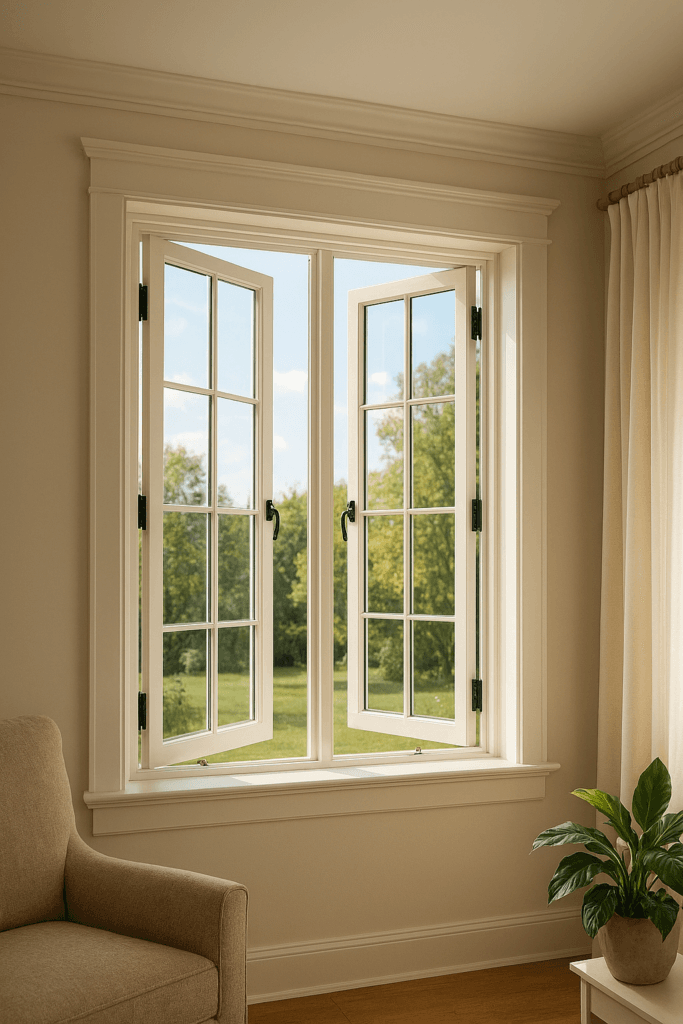
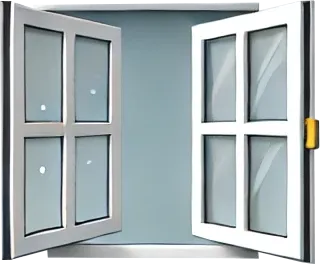
Casement windows are windows mounted on side hinges. They open like doors, outward, and do not take up space inside the room.
Advantages:
- The sash fits tightly to the frame, which helps to better retain heat in the room. This type of window is well suited for Chicago winters.
- Since the sash has no crossbars, it provides an unobstructed view and lets more light into the room.
- The sash opens outward and does not take up space in the room. You can freely use the windowsill for storage without fear that windy weather will knock things off with the slamming sash.
- This type of window is ideal for kitchens or bathrooms, as the swing mechanism makes it easier to ventilate the room (large air flow).
Weak points:
- The handles and hinges are subject to heavy loads. They are vulnerable and require regular checks, careful use, and specific maintenance (lubricating the hinges).
- In windy weather, the outward-opening sash can be deformed. It is necessary to ensure that the wind does not “rip” the open sash.
- These windows can be more expensive than single-hung or sliding windows.
Single-hung windows
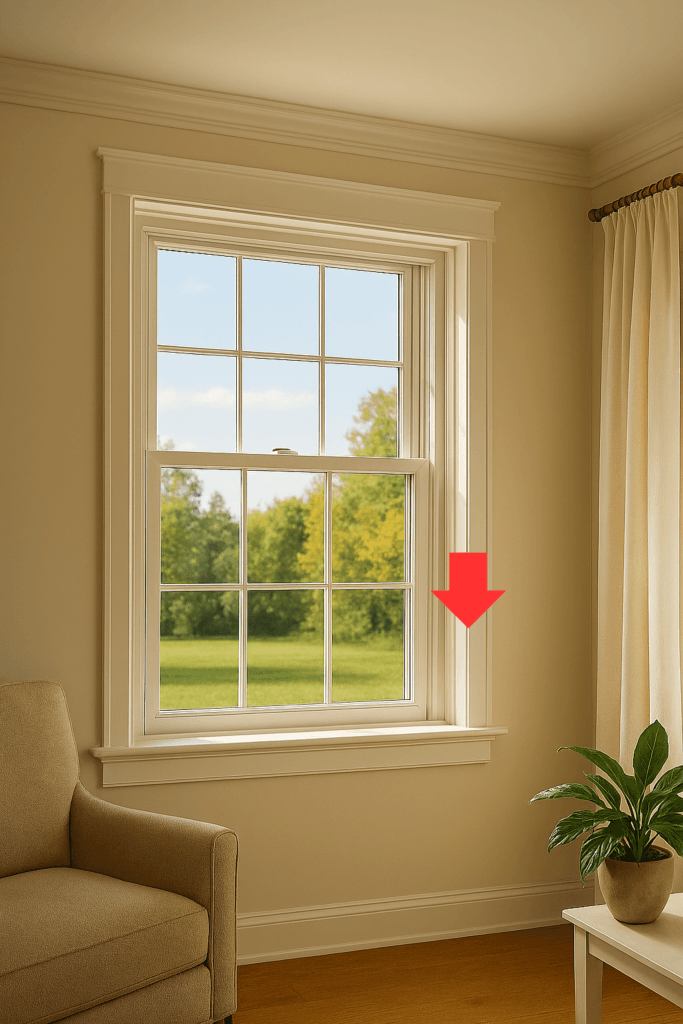
This type of window is the most common in the United States. It is especially popular among lovers of colonial and traditional style homes. The window design consists of a fixed upper sash and a lower sash that slides up and down. The mechanism is a simple vertical guide without unnecessary details and complex elements.
Advantages:
- Affordable price compared to other types of windows.
- Simple mechanism that is less prone to breakage and easy to repair.
- The upper sash is fixed, which means it is always airtight and reduces heat loss.
Weaknesses:
- Limited ventilation due to the fact that the upper part of the window is fixed.
- It is not possible to open the upper sash for safe ventilation (if there are children and pets).
- On upper floors, it is difficult to wash the upper fixed part, especially from the outside.
- Outdated option.
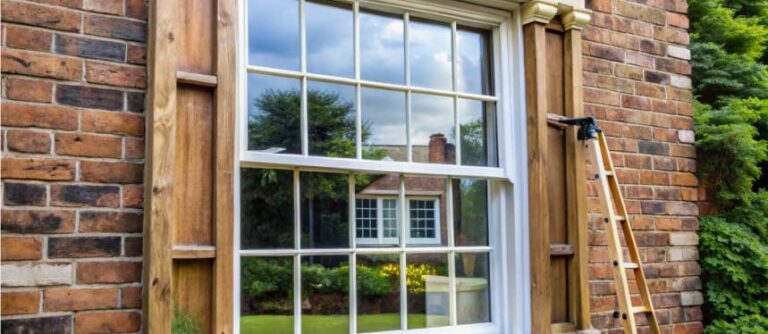
Double-hung windows
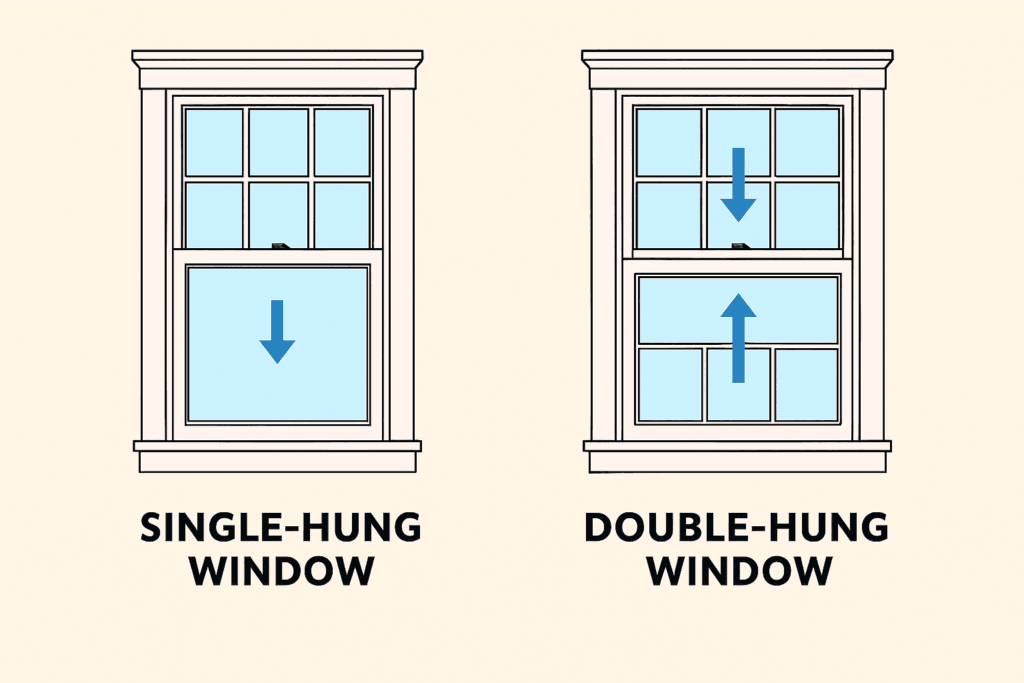
The window consists of two movable sashes (upper and lower). Each sash slides along vertical guides, allowing either the upper or lower sash to be opened. This type of window overcomes the problems of the previous one.
Advantages:
- The window is suitable for safe ventilation in homes with children and pets.
- Modern models allow the sashes to be tilted inward for easy cleaning.
- Affordable price, wide selection of materials (wood, aluminum, vinyl).
- It is easy to find parts and mechanisms for repair, as this type of window is particularly popular in the United States.
Weaknesses:
- Less airtight than other types of windows on our list.
- Low energy efficiency, especially in older models without modern seals.
- Regular maintenance of mechanisms is required, without which the sashes will stick.
Garden windows
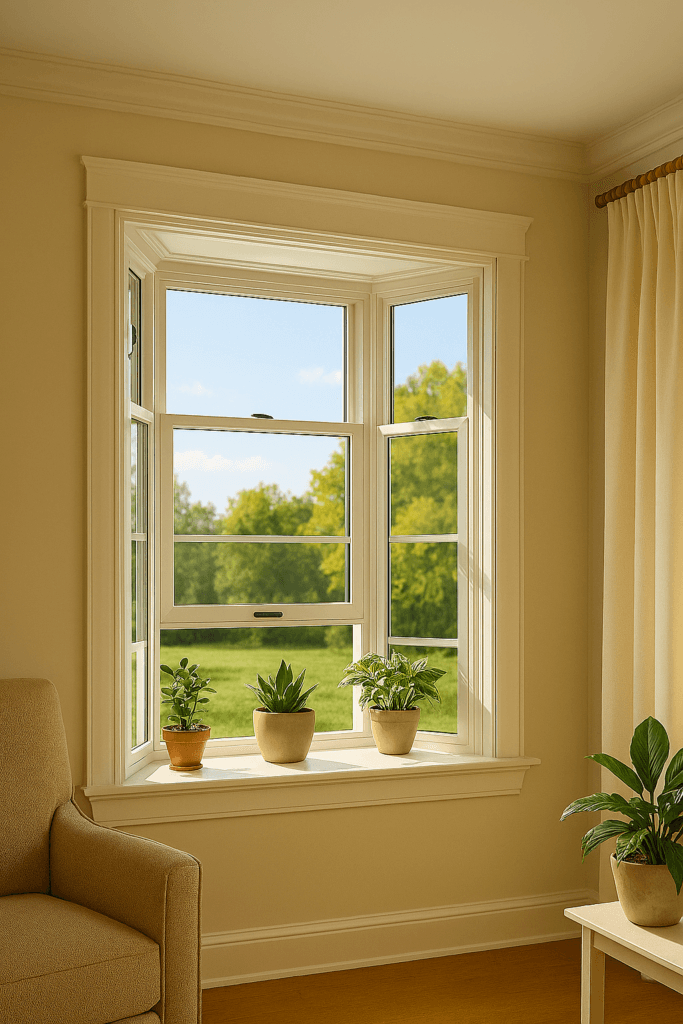
A decorative window that protrudes outward from the facade and forms a small box with transparent walls and a roof. It creates a decorative niche inside the room and is often used as a place for plants/decorative items.
Advantages:
- An interesting design feature.
- Thanks to the upper and side glass panels, more natural light enters the room.
- Adds a small niche to the interior and increases the space.
Disadvantages:
- Poor heat retention.
- Joints and corners are prone to leaks. Windows require regular inspection.
- More expensive than standard windows, as it requires complex installation and reinforced construction.
- More difficult to maintain and clean due to additional side panels.
Picture windows
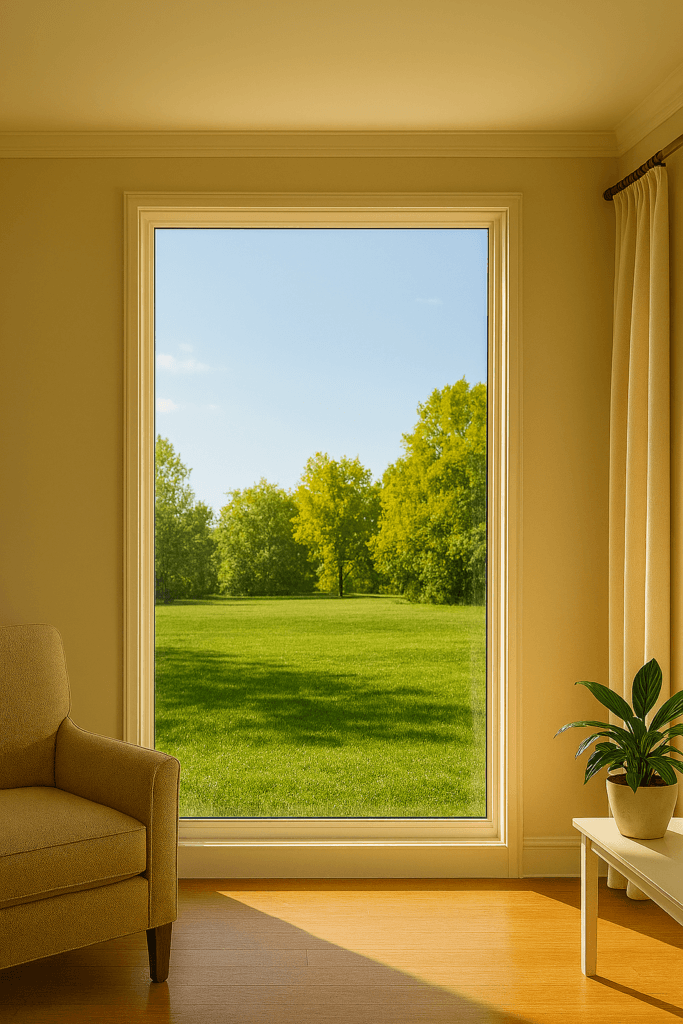
A large window without sashes or mechanisms, providing maximum visibility and light transmission. It occupies most of the wall and creates a panoramic effect.
Advantages:
- Allows a large amount of natural light into the room.
- Ideal for homes with beautiful scenic views (of a garden or body of water).
- The absence of sashes and mechanisms improves airtightness and prevents heat loss.
- Modern aesthetic appearance.
Disadvantages:
- Lack of ventilation. The window does not open, so it must be combined with other types of windows.
- Difficult to maintain, especially on upper floors.
- In sunny regions, it can lead to excessive heating of the room.
- High price due to the large size of the windows and double-glazed windows.
- If damaged, repair or replacement of the glass is expensive.
Awning windows
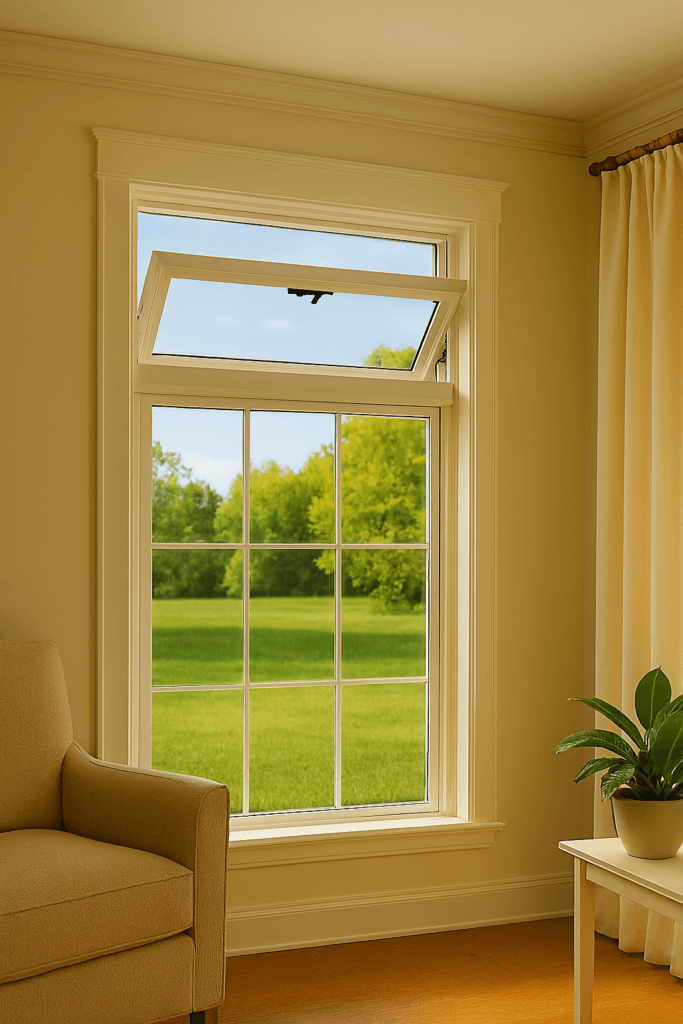
The name of the window comes from its design: the sash is attached at the top and opens outward, forming a small canopy. It is most often operated by a crank handle. These windows are compact, horizontally oriented, and often installed above or below other windows.
Advantages:
- The window can be kept open even during rain, as the sash protects the window opening like a visor.
- It goes well with picture and casement windows, making it easier to ventilate the room.
- Although the windows open outward, they are usually small in size, which prevents intruders from entering your home.
Weaknesses:
- The windows are small, so they do not provide enough light on their own.
- The handle and hinges require special care as they are subject to frequent wear and tear.
- It is difficult to wash the outside on the upper floors.
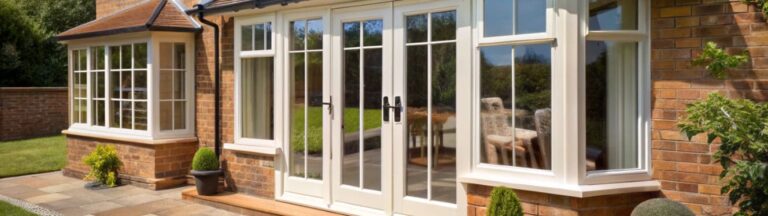
Bay windows
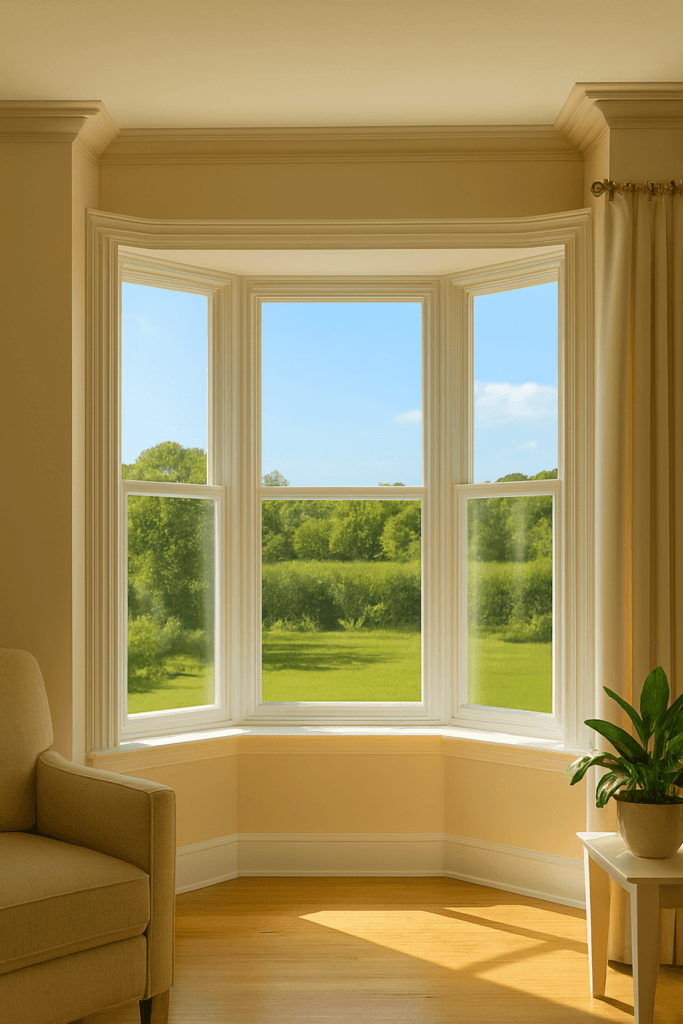
This type of window consists of three parts that protrude outward from the facade at an angle (usually 30°, 45°, or 90°). The central window is most often fixed, without mechanisms (picture), while the side windows are opening (casement or double-hung).
How does it differ from a garden window?
Bay windows: large structures, usually from floor to ceiling or occupying a significant part of the wall. Usually 3 windows: central fixed + side opening (casement/double-hung).
Garden windows: compact, most often installed above the kitchen sink or in a small niche. One main window with side panels and a transparent roof.
Advantages of bay windows:
- A niche is formed inside, which can be used as a seat, shelf, or decorative corner.
- They let in more natural light than conventional windows and create a panoramic view.
- Bay windows are often perceived as a premium feature that increases the value of a property.
Weaknesses:
- High price due to the complexity of construction and installation.
- The more joints and corners there are, the higher the risk of heat loss and leaks.
- More surfaces to clean and maintain.
Bow windows
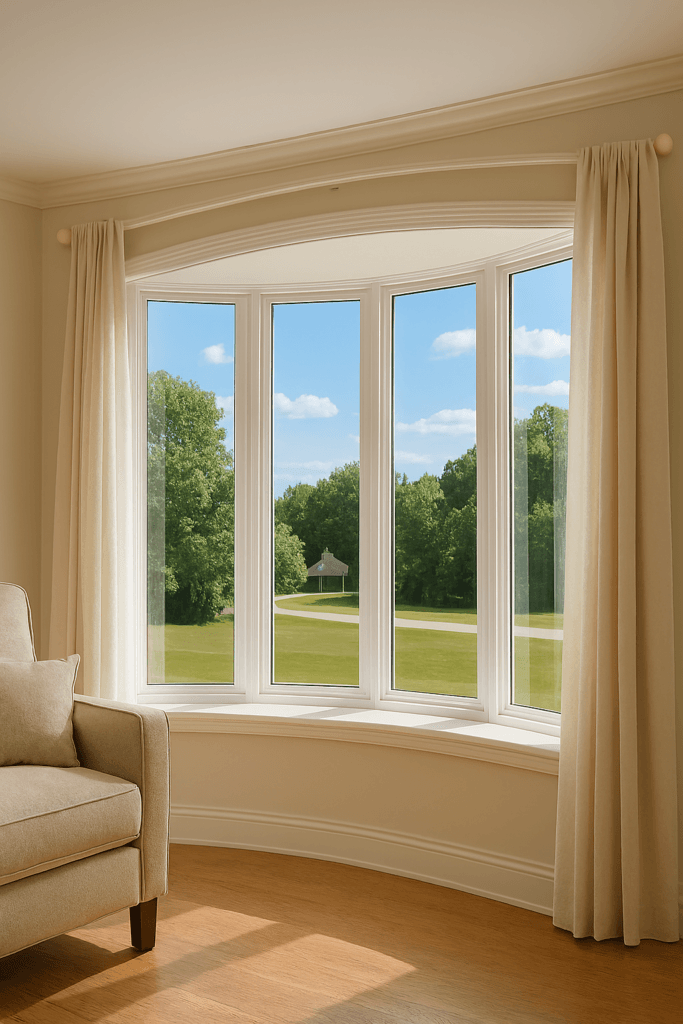
Bow windows consist of 4-6 windows installed in an arc, creating a smooth semicircular protrusion outward. Most often, this is a combination of fixed (picture) and opening (casement or double-hung windows) windows. This creates a feeling of a space flooded with light.
Advantages:
- They let a lot of natural light into the room.
- They create the effect of a glass wall with a wide viewing angle.
- Expand the space and add a niche.
- Perceived as a premium feature, increasing the appeal and value of the property.
Weaknesses:
- High price due to the complexity of construction and installation.
- Professional installation and sealing required.
- The more joints, the higher the risk of energy loss.
Sliding windows
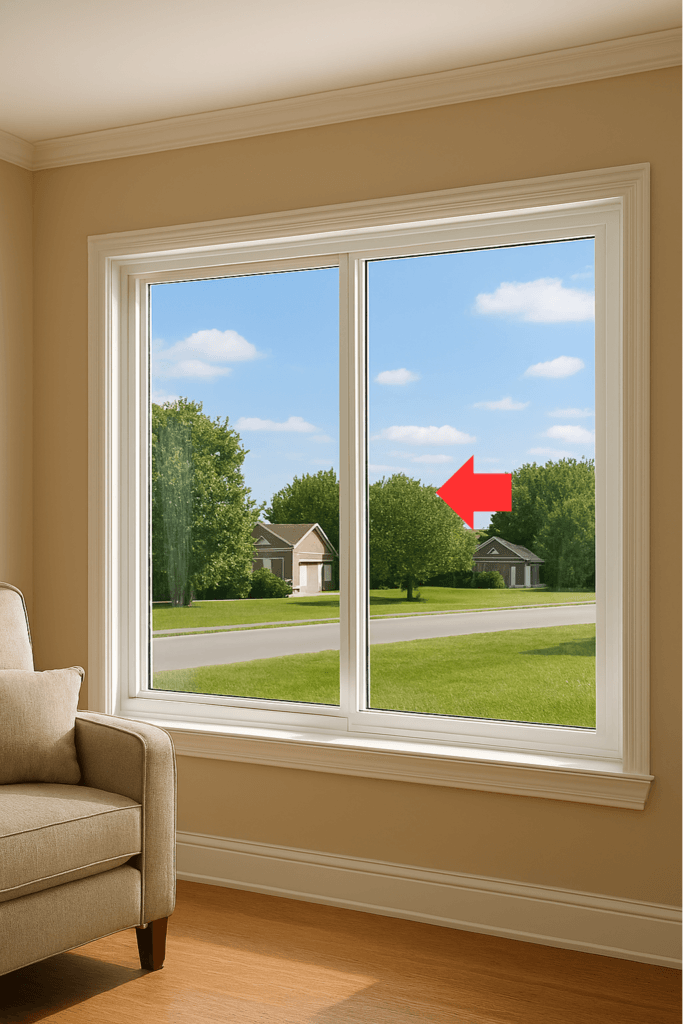
The sashes of this window move left and right along horizontal guides. Usually, one sash is fixed, while the other is movable. There is a variation of this window with three sashes, where the central sash is fixed and the side sashes are movable.
Advantages:
- Easy to use, opens and closes easily without additional effort.
- Saves space because the sashes do not protrude outward or inward. Suitable for balconies and terraces.
- Provides a good view due to large window openings.
Weaknesses:
- Not the most reliable seal compared to other types of windows.
- The guides require regular cleaning and maintenance.
- Energy efficiency is average or low, especially in cold climates.
Top 3 window types for Chicago suburbs according to Rotten Window Repair:
- Casement windows: excellent sealing, withstand wind and frost. High energy efficiency, tight fit, easy to clean. The opening mechanism requires maintenance, limited in strong winds.
- Double-hung windows: classic style for suburbs (Joliet, Plainfield, Aurora), convenient for ventilation in summer. Flexibility: open from the top and bottom, easy to clean, fit Chicago architecture. Less airtight than casement windows.
- Bay/Bow windows: add light and space, valued in homes with garden or street views. Architectural accent, expand the room, increase the value of the home. More expensive and difficult to install.
Of course, the choice is yours. Our job is to inform you, because forewarned is forearmed! The main thing is that the window meets your needs, works properly, and you like the way it looks. If you need advice on replacing your window with a new one or repairing your current one, you can call us at +1(630)716-6181 or leave a request on our website and get a free consultation (technician visit + measurements).